

Art Heals Invisible Wounds: drawchange Honors PTSD Awareness Month

Updated: Sep 17
June is PTSD Awareness Month, and it holds a special place in our hearts at drawchange. We'd like to honor everyone living with the invisible weight of trauma and to affirm what we witness every single session: healing is possible, and art is one of the most powerful paths there.

What Is PTSD, and Why Does Awareness Matter?
Post-traumatic stress disorder (PTSD) is a mental health condition that can develop after experiencing or witnessing something deeply frightening or harmful. It can affect anyone, regardless of age, background, or circumstance.
According to the National Center for PTSD:
About 5% of U.S. adults experience PTSD in any given year.
Between 14% and 43% of children and adolescents will experience at least one traumatic event in their lifetime.
Even though effective treatments exist, most people living with PTSD never receive the help they need.
PTSD Awareness Month exists to change that. It is here to reduce stigma, open conversations, and remind those carrying invisible wounds that they are not alone.
Signs of PTSD in Children
Many of the children we serve at drawchange are navigating the effects of Adverse Childhood Experiences (ACEs), which include exposure to violence, abuse, neglect, or instability. These experiences leave invisible wounds that show up as trouble focusing, emotional withdrawal, difficulty sleeping, or a deep reluctance to speak about what happened.
Children often lack the words for what they are carrying. But they have something words cannot always reach: the capacity to create. Our art therapy programs is where we enable them with the tools to sustain that creative practice.
Why Art Therapy Helps Children Heal from Trauma
A 2025 systematic review in Frontiers in Psychiatry found that arts therapies, including visual art, music, drama, and dance, show significant positive effects on PTSD symptoms in children and adolescents, particularly in emotional regulation and the reduction of intrusive memories.
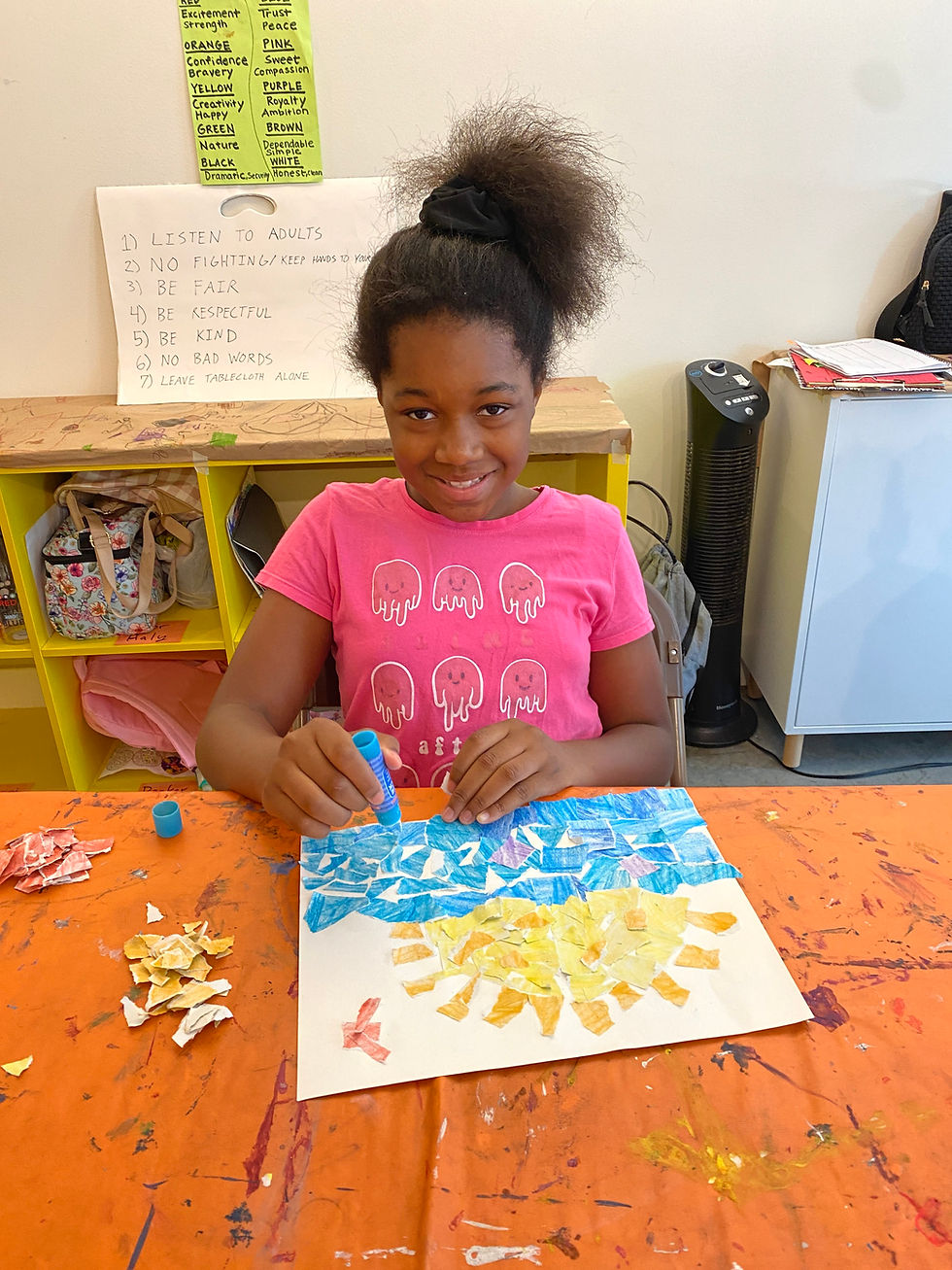
For children who have experienced trauma, art offers something rare: a safe space to express what words cannot hold. A brushstroke can carry what language cannot. Color can communicate what silence has kept locked away.
At drawchange, this is the foundation of everything we do. Our art therapy-based curriculum is developed and regularly audited by licensed art therapists, ensuring our programming meets children where they are and gives them the consistent, nurturing creative space they deserve.
Want to go deeper? Explore the power of self-expression in children or discover how mandalas help anxious children find calm.
Give a Child the Space to Heal This June
This PTSD Awareness Month, you can do something meaningful: help a child heal through art.
Our Art Camp Scholarship Fund ensures that no financial barrier stands between a child and the creative healing they need. Art Camp is one of our most transformative programs, offering children consistent access to therapeutic, art-based experiences in a safe, encouraging environment.
Every dollar you give sends a child to a place where their invisible wounds are seen, held, and met with color and care.
→ Donate to the Art Camp Scholarship Fund and help a child imagine, express, and heal.
References
National Center for PTSD. (2025). Help raise PTSD awareness. U.S. Department of Veterans Affairs. https://www.ptsd.va.gov/understand/awareness/index.asp
SAMHSA. (2022). SAMHSA recognizes posttraumatic stress disorder awareness month. Substance Abuse and Mental Health Services Administration. https://www.samhsa.gov/blog/posttraumatic-stress-disorder-awareness-month
Frontiers in Psychiatry. (2025). Systematic review of the effectiveness of arts therapy for children and adolescents with post-traumatic stress disorder. https://www.frontiersin.org/journals/psychiatry/articles/10.3389/fpsyt.2025.1716481/full
Veteran.com. (2024). PTSD Awareness Day. https://veteran.com/ptsd-awareness-day/


Thank you for this insightful piece on tip calculator the healing power of art for those with PTSD. I wonder, how do you think community involvement in art therapy can further enhance recovery?